
A diet built for you, not for everyone
Your meal plan, your trainer's work. The app just makes it easier to live with.
No app on its own can write you a real diet. We do that — Marvic and Miriam — for every client, by hand. The app is what makes it easy to log a meal in three seconds, see whether the day actually fit the plan, and shop without thinking about it twice.
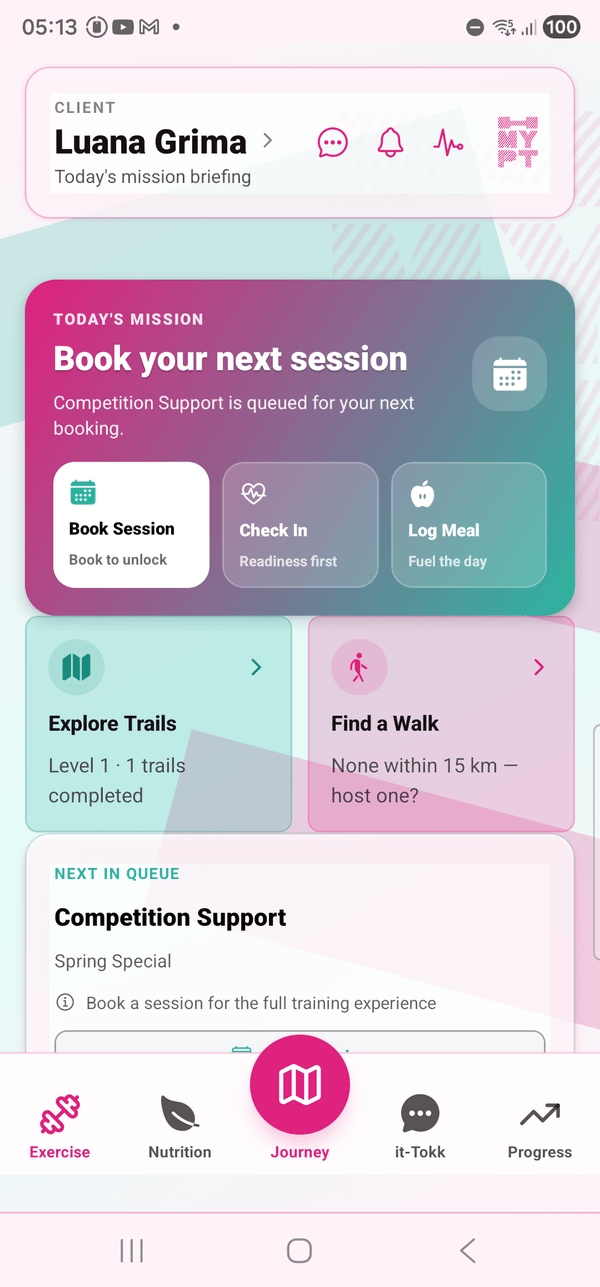
Everything a diet built for you, not for everyone does for you.
- Your meal plan is written by your trainer, around your life, allergies, kitchen, and goals
- Log meals in three seconds with a photo — the AI does the macro maths, your trainer reviews the patterns
- A 7-point daily score that watches more than calories — protein, fibre, sugar, sodium, timing
- Five-hundred-plus original recipes adapted to what you can actually buy in Malta
- Shopping lists built from your week, with the pantry already deducted
- Glycemic index and sodium alerts surfaced inline, no menu-diving
What this is, plainly
Nobody loses weight from an app. Nobody fixes their relationship with food from a database. The change comes from a plan that fits your life and a qualified person honest enough to tell you when you are drifting. Miriam Saliba is a state-registered dietitian — she writes every plan in MyPT by hand, one client at a time. The app is what makes the plan easy to live with: log a meal in three seconds, see whether the day actually fit, shop without thinking about it twice.
We do not use AI to write your diet. AI helps you log faster. The clinical thinking work — what you should eat, how much, when, and what to do when life happens — is Miriam's. Anything else would be guessing with extra steps.
How your plan gets written
Before your plan lands in the app, Miriam sits down with you. In person at Tal‑Qroqq, or over a video call if you are remote. She works through:
- Your goal, in your own words — not "lose 5kg" but the version of yourself you are trying to feel like
- Your training week — how it changes what you need to eat on different days
- Your kitchen — what you cook, what you do not, who you cook for, how much time you have
- Your shopping — where you buy, what is realistic, what is a stretch
- Past dieting history — what has worked, what has wrecked you
- Allergies, intolerances, religious or ethical constraints
- Any clinical context — bloods, medications, conditions that change the prescription
- Your relationship with food — honestly, not performatively
Then she writes the plan. Macros per day. Meal counts. A library of suggested recipes drawn from things you said you would eat. A shopping list for the first week. A short note from her explaining the logic, so you understand why the plan looks the way it does. The science behind it is open to you on request.
Logging, made painless
The fastest way to log a meal accurately turns out to be a photo. Take a picture of your plate. The vision model identifies what is on it, estimates portions, and returns a structured meal log with per-item macros and a confidence score. You see the breakdown — "320g pasta, 80g chicken, 50g tomato sauce, side salad" — and you accept, tweak, or reject individual items.
For meals where photos do not work, four fallbacks:
- Barcode. Scan packaged foods. Open Food Facts plus a curated override database for Malta-local products the global one miscategorises.
- Voice or text. "Two eggs and toast, a coffee with milk." Parses into structured items.
- Search. Sub-100ms search across the recipe library and food database.
- Favourites. By week three most clients log 80% of their day from favourites in one tap.
The 7-component daily score
Most apps grade you on calories and protein. That is the easy part. Miriam grades you on seven dimensions, because hitting protein on ultra-processed food is not the same as hitting protein on real meals — and the difference shows up in your skin, your sleep, your bloods and your mood long before it shows up in the mirror.
- Protein hit — did you reach Miriam's target for the day?
- Calorie window — landed in the right range, not just under?
- Fibre — most adults under-eat fibre by 50%
- Sugar — added sugar specifically, not natural fruit sugar
- Sodium — quietly important for blood pressure and water retention
- Food variety — did you eat the same five things again?
- Meal timing — eating windows that respect training and sleep
Each scores 0–10. Total out of 70. The score itself is the surface — the breakdown is what Miriam looks at when she sits with your week.
The recipe library, adapted to Malta
Over 500 original recipes, written by us or by vetted contributors. No scraped content. About a third are Mediterranean staples adapted to Maltese cooking and ingredients. The rest are flexible recipes that work with what is actually on the shelves at Smart, Welbees, Greens and Lidl.
Every recipe has full macros, photo, prep and cook time, allergen flags, and a "make this instead" suggestion if the main version does not fit your day. Recipes link directly to the shopping list — tap "Add to shopping list" and the ingredients merge into your existing list with quantities scaled for the servings you need.
Pantry and shopping that pay attention
The Pantry tab is a running inventory of what is at home, what is running low, and what expires soon. We built it because half of our clients were buying duplicate olive oil and throwing food out from the back of the fridge. The shopping list pulls from the pantry — if you already have flour, the recipe ingredients do not get added to the list.
"I have done four diets in my life. The first three felt like punishment until I quit. This one is the first one a real dietitian actually wrote for me — not a copy-paste from a magazine. I have lost nine kilos in five months and I have not once been hungry in a way that scared me."
— Studio client, Malta
Privacy, because food data is personal
Meal photos are processed by the vision model in EU data centres, are never used to train the model, and are deleted from our servers within 24 hours. Your nutrition history is yours — exportable as a CSV at any time, deletable in one tap. We do not sell your data. We do not share it with third parties. Miriam uses it to coach you. That is it.
A diet built for you, not for everyone — your questions, answered.
Who writes my diet plan?
Miriam Saliba, a state-registered dietitian. She writes every plan by hand, after a real conversation with you about your kitchen, your training, your allergies, your goals, your past dieting history, and what you can actually live with. The plan that lands in your app on day one was written for you — not a template, not an AI guess.
Why does a dietitian credential matter?
A dietitian is a regulated, qualified clinician — Miriam is on the official state register in Malta. That means her nutrition advice is held to the same evidence base used in clinical settings. The market is full of "nutrition coaches" with weekend qualifications. We thought it was important to do it properly.
Is the AI writing my meal plan?
No. The AI assists with two specific jobs: estimating macros from a photo of your meal (so logging takes three seconds instead of three minutes), and surfacing recipe ideas Miriam can pick from. The plan itself — what you should eat, how much, when — is a human document, written by her.
How accurate is the photo meal scan?
For plated, well-lit, single-portion meals: usually within ±15% of true macros. For mixed dishes, takeaway, or unusual cuisines: confidence drops and the app prompts you to adjust manually. Every estimate shows its confidence, so you know when to trust it and when to nudge it.
Are the recipes Maltese?
About a third are Mediterranean staples adapted to Maltese cooking — ricotta-based pastas, fenkata-friendly portion guides, timpana that fits a macro target. The rest are flexible recipes that work with what is actually on the shelves at Smart, Welbees, Greens, and Lidl. Every recipe in the library was written by us or vetted by Miriam.
I have allergies / I am vegetarian / I cannot stand fish. How does that work?
It just works. Miriam learns what you do not eat in the first conversation. The plan is built around it from day one, and the recipe library filters to match. If something is genuinely impossible for you to cook — long hours, no time, takeaway-only — the plan is built around that too. We do not pretend you live in a kitchen you do not have.
What does the 7-component score actually measure?
Each day is graded across seven dimensions: protein hit, calorie window, fibre, sugar, sodium, food variety, and meal timing. Most apps grade you on calories and protein only — we grade the wider picture because hitting protein on ultra-processed food is not the same as hitting protein on real meals. Miriam reviews the breakdowns weekly to spot patterns the daily logging cannot show.
The features that work best with this one.
When you are ready, we will be too.
Install the app, take a look around, train with us in person whenever it feels right. There is no rush, no upsell, and no waiting list you cannot get on.