
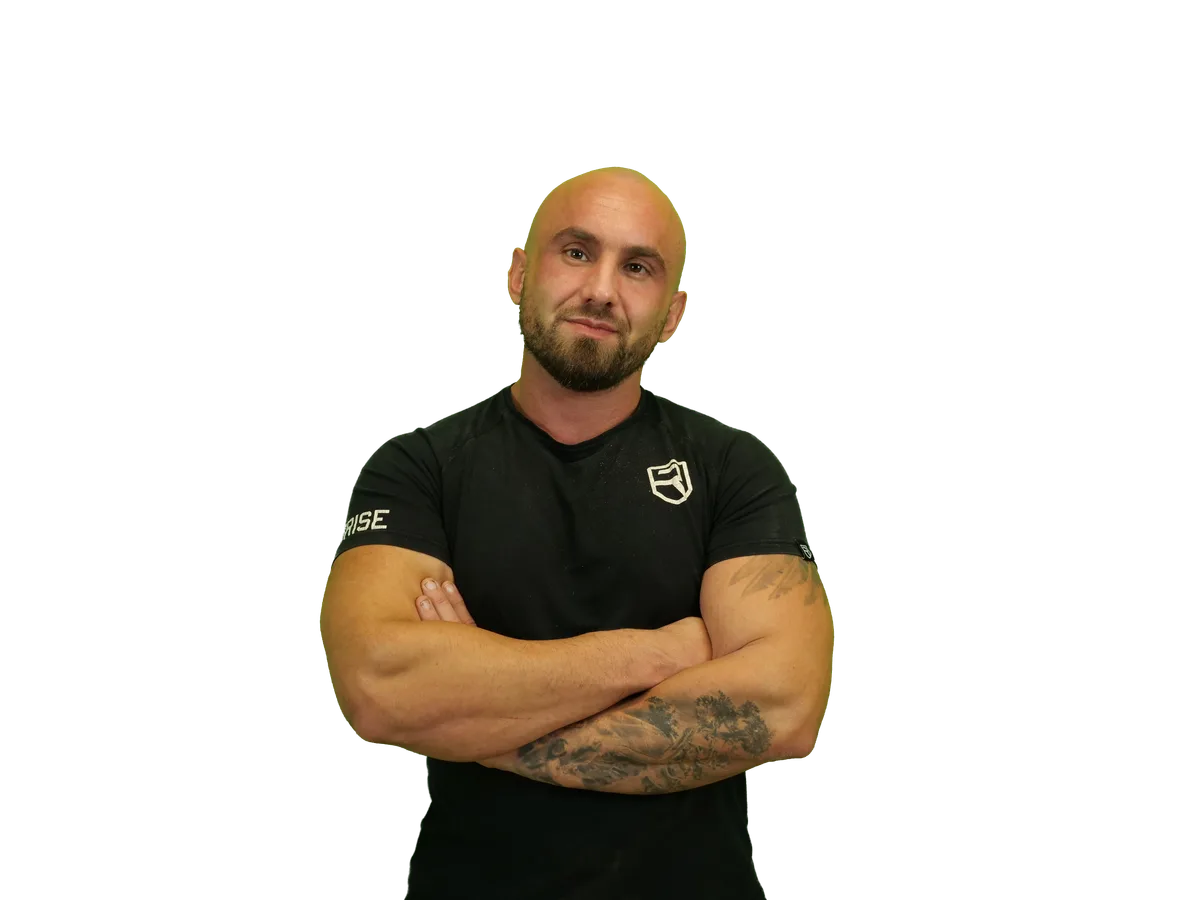
I weighed almost 145 kilograms
That’s not a marketing number. It’s the number on the scale the morning I stopped pretending I wasn’t going to do anything about it. I was in my mid-twenties. I had been heavy my whole adult life. I didn’t think of myself as someone who could be otherwise.
Daily things were hard. Getting up off the floor. Tying shoes. Walking up a flight of stairs without thinking about it. Going through a normal doorway sideways at certain angles because my shoulders had to. The kind of small, accumulating dignities you don’t notice you’ve lost until you start getting them back.
The thing nobody tells you
The thing nobody tells you about being a heavy person in your twenties is how much of your mental life it takes up. You are negotiating with food all day — every social event, every meeting that goes long, every drive past a familiar bakery. The negotiations are exhausting, and you usually lose them. You feel like the problem is willpower, and willpower keeps running out.
The real problem, I figured out years later, is that we’re trying to solve the wrong puzzle. We treat it as a moral failing when it’s actually a behavioural design problem. You don’t out-discipline a bad environment. You change the environment.
What worked, eventually
I’d love to tell you there was a single revelation. There wasn’t. There was a long, boring, repetitive process of getting smaller. Some of what worked:
- Walking. Before any of the lifting. Just walking. Hours of it.
- Sleep. Seven and a half hours, consistently. Most of the food cravings I had were sleep cravings in disguise.
- Eating breakfast. I had been a coffee-and-nothing-until-2pm person, which guaranteed I ate everything in sight from 3pm onwards.
- Lifting heavy things. Once I’d lost enough weight to actually move properly. The muscle I built protected the loss as I kept going.
- A coach. Honestly. I had a trainer who refused to be impressed by my plan and refused to be discouraged by my setbacks. He just kept showing up.
The fitness industry sold me a hundred shortcuts before this. None of them worked. The boring stuff did.
Why I coach the way I coach
When a new client walks into Tal‑Qroqq for the first time and they’re carrying the weight I used to carry, I see them in a way I couldn’t have seen them if I hadn’t lived it. The patience isn’t an act. The absence of judgement isn’t performative. I know exactly the conversation they’re having with themselves before they walked through the door. I had that conversation for years.
This is also why I specialise in adaptive personal training for people with intellectual disabilities. That work asks you to remove every assumption you’ve ever made about what a person “should” be able to do, and meet them where they are. I think every coach should do this work at least once. It changes how you coach everyone.
The patience that surprises new clients
Most clients who train with me are surprised, in the first month, by how slowly we move. There’s no hurry. We don’t rush you through movements you can’t do safely. We don’t aim for big weights when good technique on a moderate weight does more for you. We don’t shame you for missing a week. We figure out why the week got missed and we fix the cause.
This isn’t a lazy version of coaching. It’s actually harder than aggressive coaching, because it requires you to genuinely care whether the person in front of you is going to stick with this for years instead of months. The transformation only happens on the year-scale. Anything you do in eight weeks unwinds in twelve.
The qualifications, while we’re being honest
I’m a Certified Personal Trainer. I hold an MBA in Sports Management. I’m currently reading for an MSc in Youth Athletic Development. The academic side matters to me — not as a flex, but because the principles of programming are not negotiable and I want to get them right. The MSc work in particular has changed how I program for clients across all ages, not just the youth athletes the degree focuses on.
The credentials make me a more capable trainer. The 145kg makes me a different one.
If any of this sounds familiar
If you’re reading this carrying weight that doesn’t feel like yours, and you’re tired of trying things that don’t work — the door at Tal‑Qroqq is open. You don’t have to be brave to walk through it. You just have to be tired enough of pretending. The first session is a conversation, not a workout. Nobody’s going to make you do anything that scares you.
I was you. I am writing this from the other side. The path between is not glamorous, but it is real, and we know how to walk it with you.